
How much cheaper is fixing than redoing: The tipping point of reuse economics
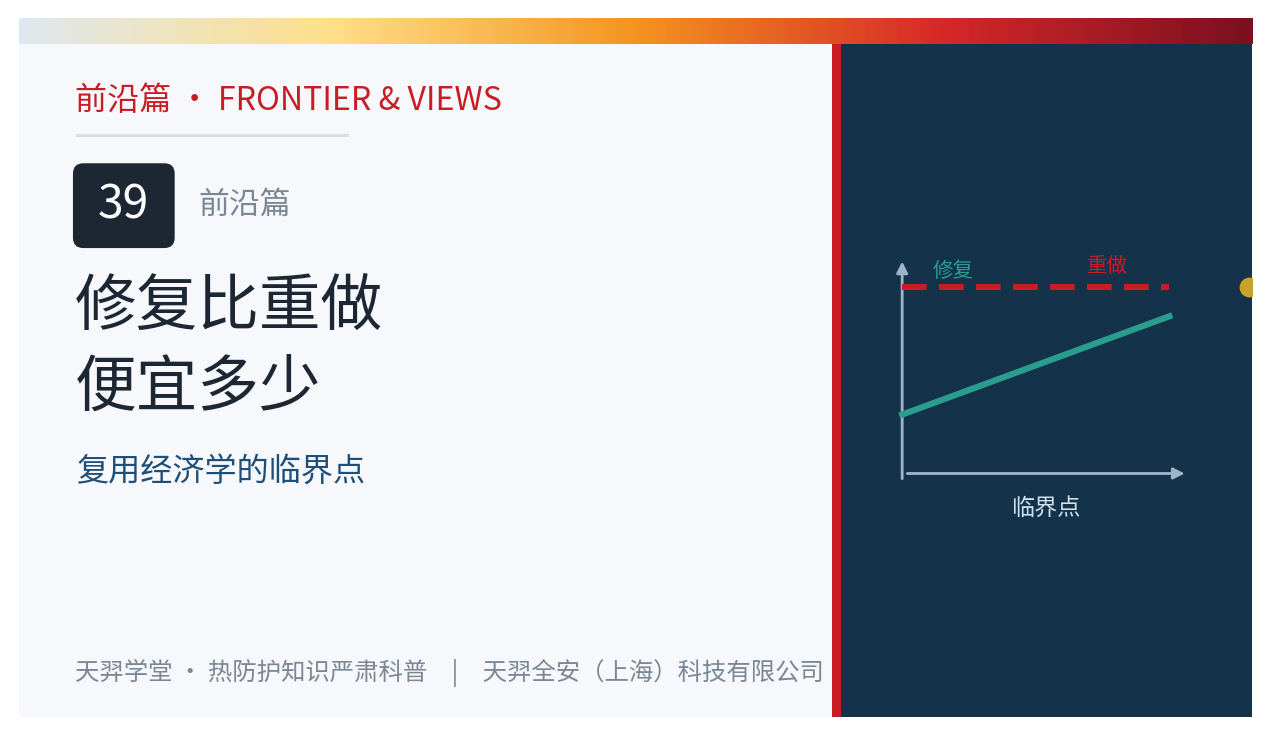
Is it better to repair a damaged heat shield or replace it entirely? Repair isn't always cost-effective; the heavier the damage, the higher the repair cost. Beyond a certain threshold, replacement becomes cheaper than repair. Identifying this tipping point is key to reusability economics.
Introduction
The heat shield is damaged: repair it for reuse, or build a new one? This isn't just a technical question—it's an economic calculation. Repair isn't always cost-effective; the more severe the damage, the higher the repair cost. Once you cross a certain threshold, building new becomes cheaper. Identifying that threshold is key to the economics of reuse.
2. Common Sense: Repair has a "critical point."
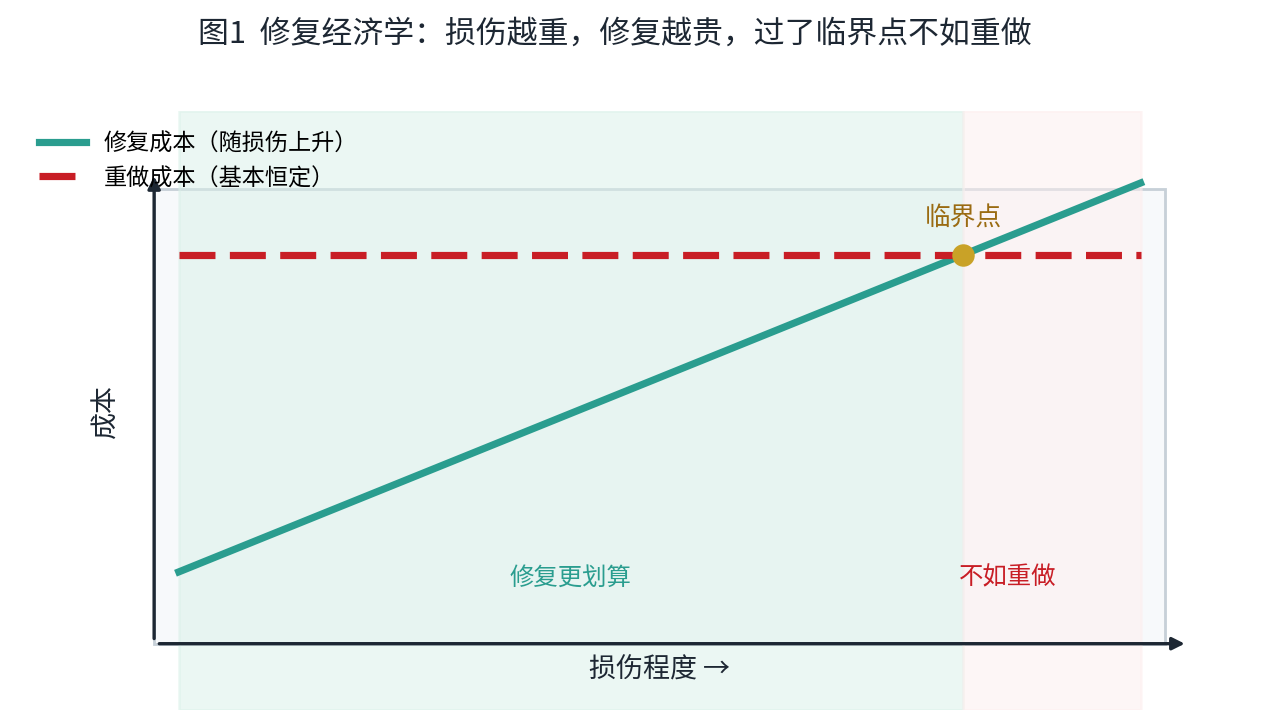
The cost to rebuild is roughly fixed, while repair costs rise with damage severity: the more damaged it is, the more extensive and expensive the repairs become. These two lines intersect at a critical point. Before this point, repairing is more cost-effective; beyond it, repair costs catch up to or exceed the cost of rebuilding.
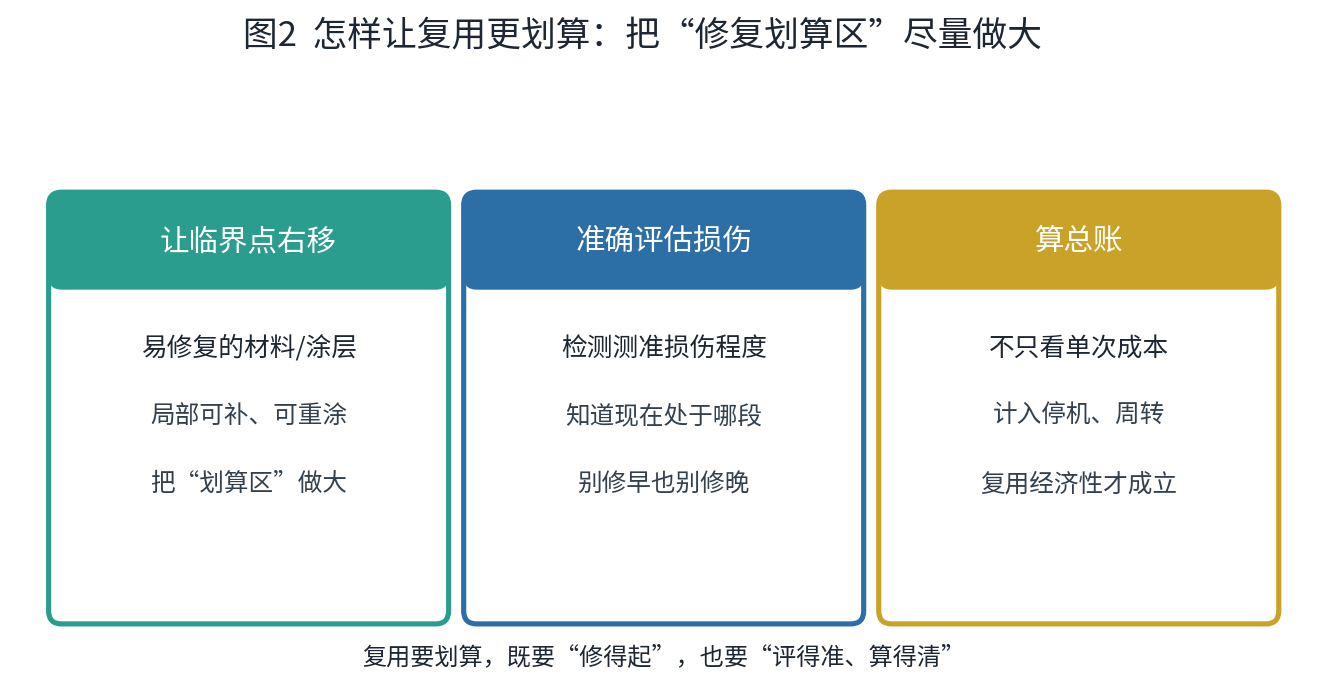
To make reuse more economical, focus on three actions: first, shift the break-even point to the right by using easily repairable materials and coatings that allow localized fixes and repainting, expanding the "cost-effective repair zone"; second, accurately assess damage to determine exactly where you are on the curve—avoiding premature or delayed repairs; third, calculate the total cost of ownership, factoring in downtime and turnover alongside single-repair costs, so true economic viability for reuse is achieved.
4. Challenge: Critical thresholds vary by scenario
The critical threshold isn't a fixed number; it varies by material, manufacturing process, damage type, and the costs of labor versus downtime. The same damage may require repair in one scenario but replacement in another. Determining the right course of action requires evaluating both technical specifications and economic factors together.
⑤ Tianyi's Perspective: Designed for "Repairability"
Tianyi Quan'an was designed with "repairability" in mind from the start—enabling local touch-ups and recoating of precursor ceramic coatings, for instance—to push the critical threshold further right and expand the cost-effective repair zone. Combined with precise damage assessment, this helps customers make clear, data-driven decisions on whether to repair or replace. True reusability requires affordable repairs, accurate assessments, and transparent cost calculations.
6. Further Reading
Reusable Rockets: From "Disposable Heat Shielding" to "Designed for Repair"
The Cost of Thermal Protection: Shifting from "Performance First" to "Cost per Kilogram"