
The Cost of Thermal Protection: Shifting from "Performance First" to "Cost per Kilogram"
Past thermal protection prioritized temperature resistance. Today, with commercial aerospace and energy storage scaling up, cost per kilogram has become the deciding factor. This article explores how to balance cost and performance.
Introduction
In the past, thermal protection discussions started with "How high a temperature can it withstand?" But as commercial spaceflight and energy storage scale up, more people are now asking first: "What's the cost per kilogram?" Performance is quietly giving way to economics.
② Common Sense: The weighting in selection is reversing
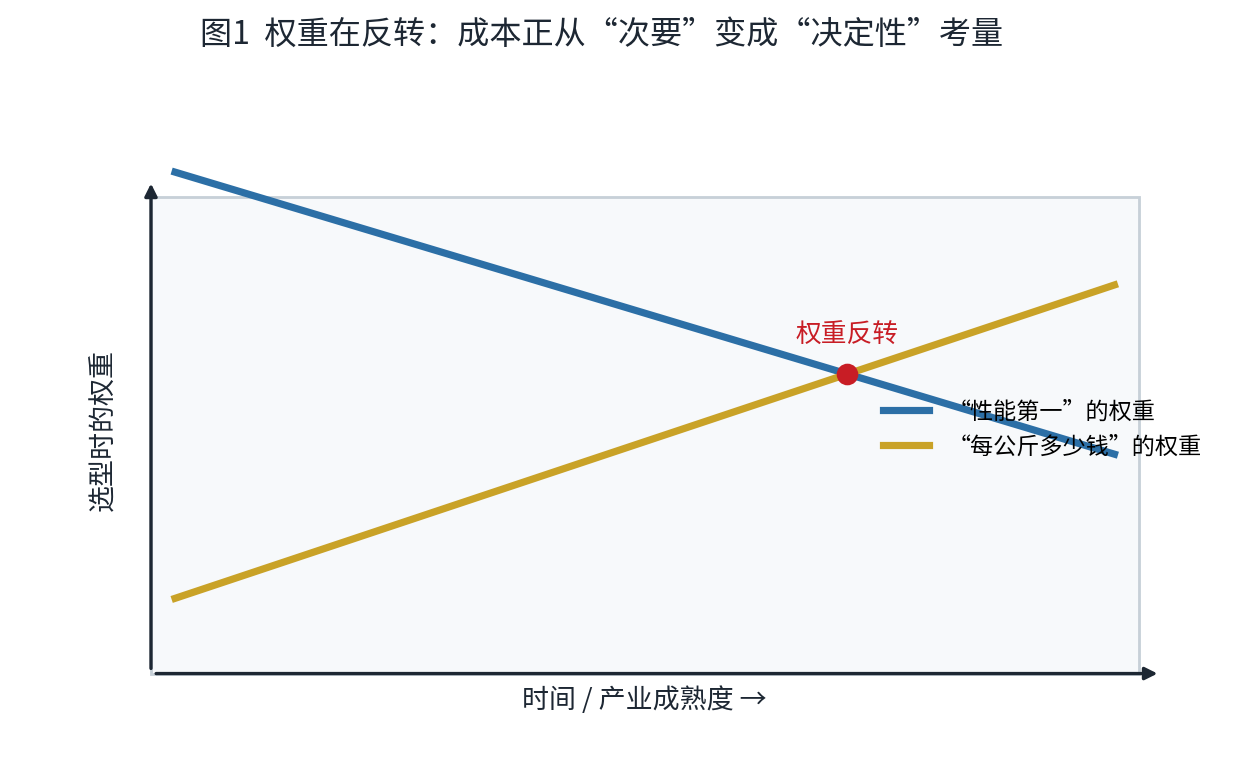
For a long time, thermal protection material selection prioritized performance above all else, with cost as a secondary factor. As the industry scales up, however, the balance is shifting: "good enough" performance is now acceptable, while "cost per kilogram" gains increasing weight and has even become the decisive factor in certain applications.
③ Reality: Switched to a different question
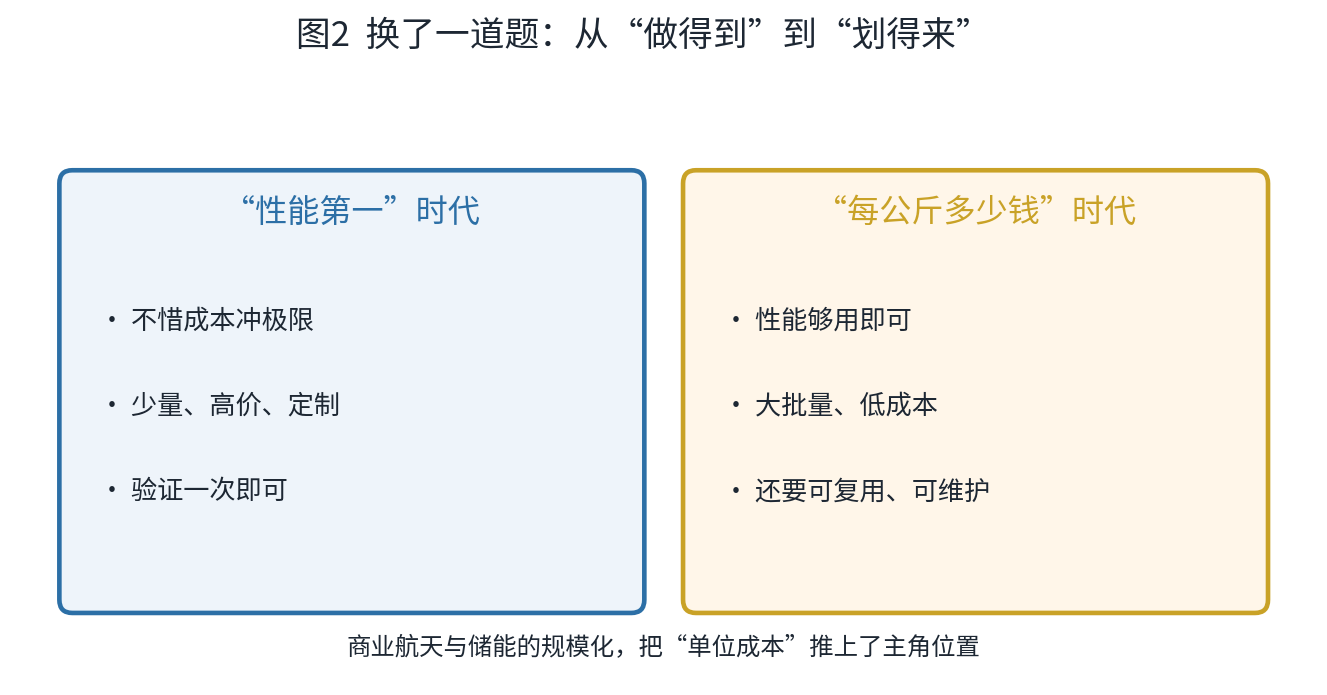
In the "performance-first" era, we could push limits at any cost: small-scale, high-priced, custom products with single-iteration validation. In today's "cost-per-kilogram" era, performance that's "good enough" suffices; the focus shifts to mass production, low costs, reusability, and maintainability. The scaling of commercial spaceflight and energy storage has elevated "unit cost" from a supporting role to the central challenge. The question has shifted from "can we do it?" to "is it worth it?"
④ Challenge: Cost and performance often trade off against each other.
Reducing costs often requires trade-offs in materials, processes, and performance, but thermal protection cannot compromise safety. Finding the right balance between "sufficient performance" and "acceptable cost"—avoiding over-engineering while maintaining a safe baseline—is the most challenging part of this equation.
5. Tianyi Perspective: Treat "Cost" as a Technical Metric
Tianyi Quan'an believes that in the new industrial phase, cost should not be an afterthought to performance but treated as a critical technical metric on par with heat resistance and thermal insulation. When exploring precursor ceramics and PHEC technologies, we consistently balance performance, cost, and manufacturability to deliver solutions that are fit-for-purpose, reliable, and cost-effective.
Withstanding high temperatures is the entry ticket; calculating costs accurately is the competitive edge of this era.
6. Further Reading
Rare Earth High-Entropy Silane Precursor Ceramics (PHEC): A Low-Cost, High-Temperature Route
How much cheaper is fixing than redoing: The tipping point of reuse economics
Why "Lighter Is Harder": The Weight-Reduction Paradox in Thermal Protection