
Condition-Based Maintenance (CBM): From "Replace at Expiration" to "Repair Based on Condition"
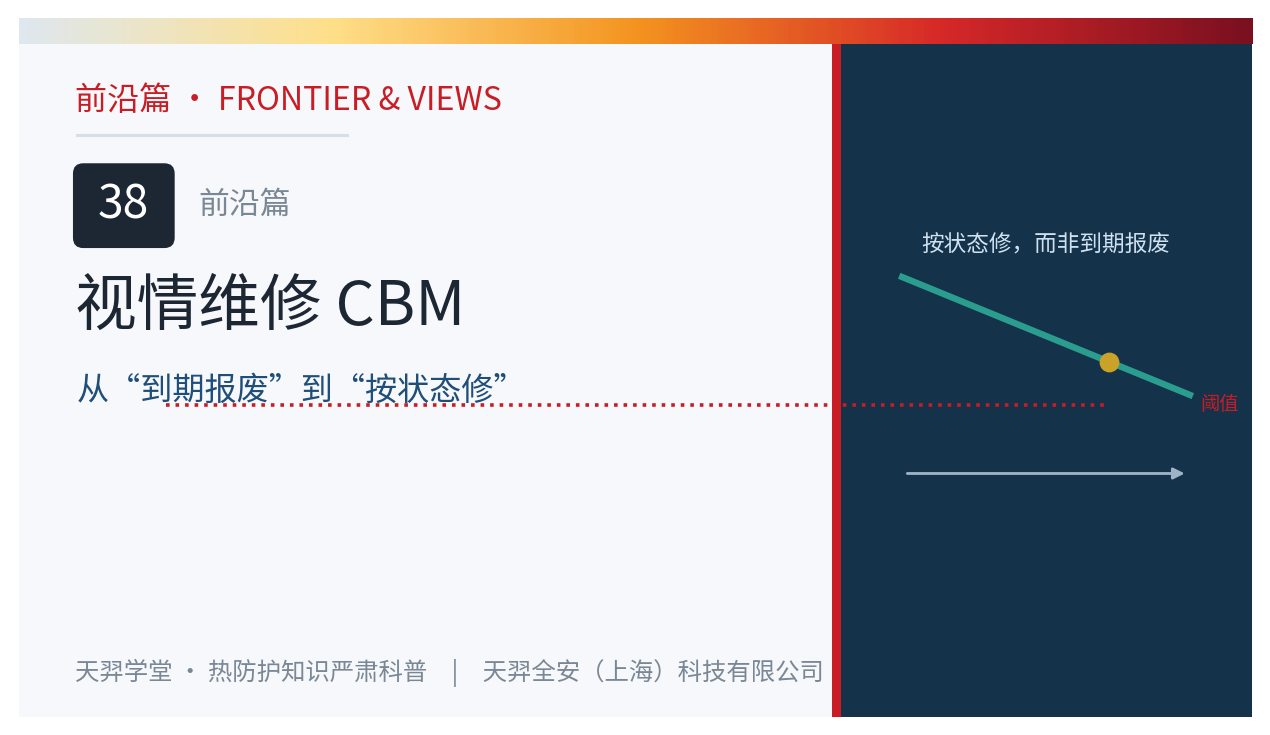
Traditional maintenance often replaces parts at fixed intervals, risking premature waste or delayed failure. Condition-Based Maintenance (CBM) determines repair timing based on the actual material condition—provided that condition can be accurately measured and assessed.
Introduction
Traditional maintenance follows a "replace when due" logic—items are scrapped or overhauled simply because time has passed, regardless of their actual condition. This approach can lead to premature replacements and waste, or delayed interventions that leave hidden risks. Is there a smarter way? Yes: Condition-Based Maintenance (CBM), which makes decisions based on the actual state of the material.
② Common Sense: Two Maintenance Philosophies
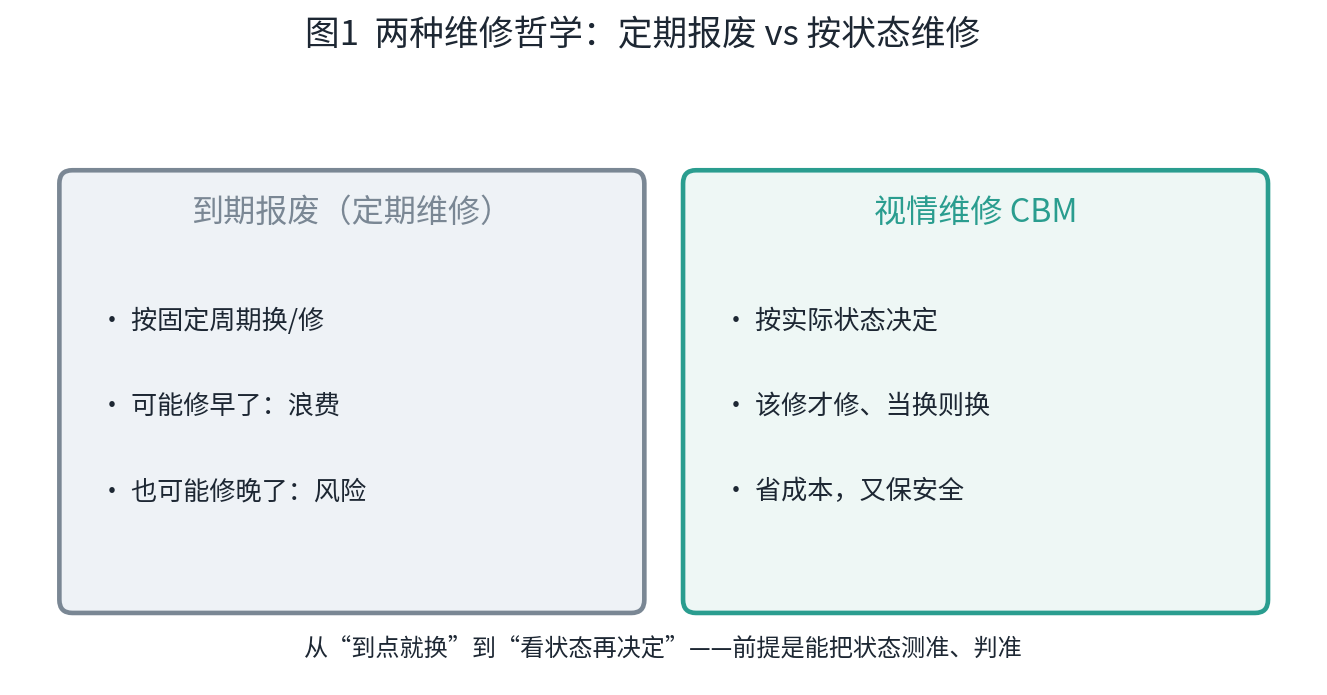
Periodic maintenance follows fixed intervals for replacement or repair. While simple, it often applies a one-size-fits-all approach: components may be replaced prematurely while still performing well, causing waste, or repairs may be delayed until after performance has degraded but before the scheduled interval, creating risk. Condition-Based Maintenance (CBM) instead decides based on actual asset condition—repairing only when necessary and replacing only when needed—to balance cost savings with safety. The key prerequisite is accurate monitoring and assessment of the asset's condition.
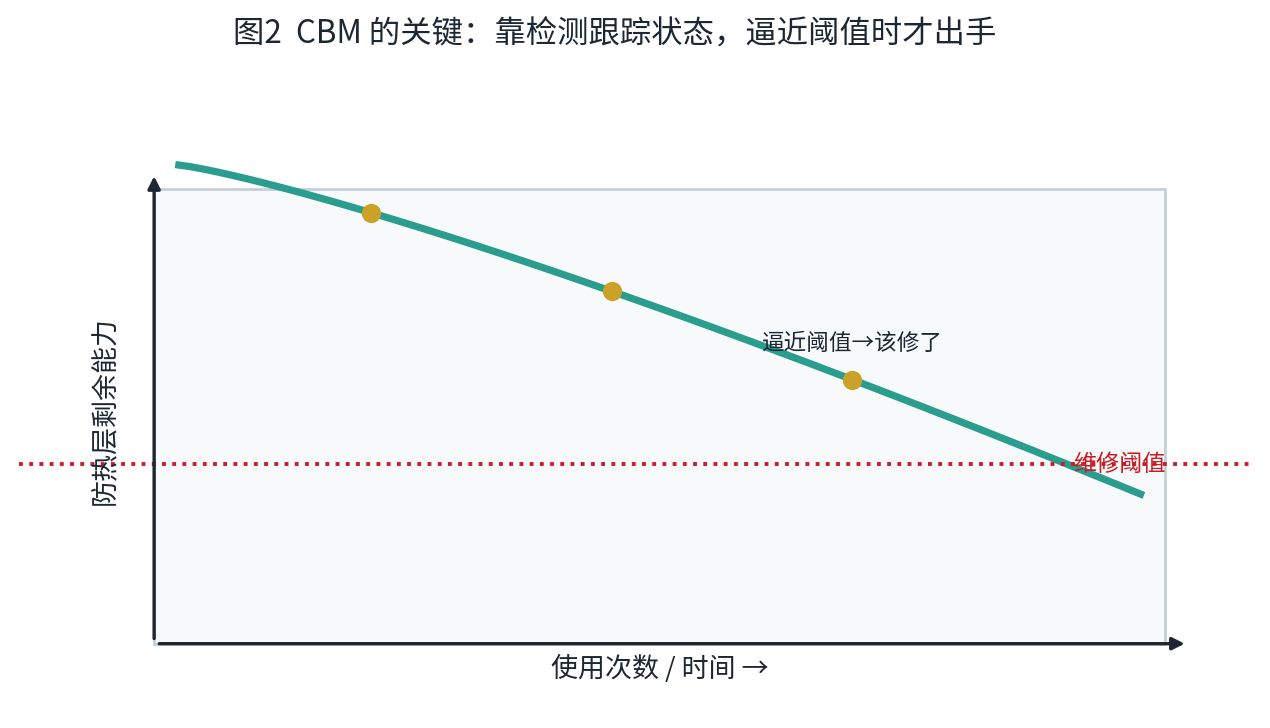
The key to CBM is continuously tracking the remaining capacity of the thermal protection layer: use repeated inspections to plot its degradation curve over usage cycles and set a maintenance threshold. Perform maintenance only when the condition approaches this threshold, rather than relying on fixed schedules. This approach avoids wasting still-functional components while ensuring no latent risks near their limits are overlooked.
Challenge: Accurately measure and correctly assess the status.
CBM feasibility hinges entirely on condition assessment: Can inspections accurately detect current damage? Can models reliably predict remaining life? Are thresholds set correctly? If any link is unreliable, CBM risks becoming maintenance based on faulty conditions. Inspection and evaluation capabilities are the foundation of CBM.
⑤ Tianyi Perspective: CBM is an extension of inspection capabilities
Tianyi Quan'an views CBM as a natural extension of inspection and evaluation capabilities. For condition-based maintenance to truly take hold, we must first solidify our core competencies in material condition monitoring, damage assessment, and life prediction. By developing an AI vision and ground testing approach, we ensure that repair decisions are data-driven rather than based on intuition.
6. Further Reading
What's the difference between reusing it for the 10th and 1th time: Coating decay curves
Can AI vision detect "internal injuries" in materials?
How much cheaper is fixing than redoing: The tipping point of reuse economics