
Why "Lighter is Harder": The Weight-Reduction Paradox in Thermal Protection
航天工程里有句老话:上天的每一克都是钱。但轻和好往往是一对冤家。本文揭示热防护绕不开的减重悖论和甜点区策略。
The Essence of the Weight Loss Paradox
The core challenge of a thermal protection system lies in:Lightweight design and high performance are often at odds.。
- Good insulation requires sufficiently thick, low-thermal-conductivity materials → increased thickness → increased weight
- High-temperature resistance requires high-density ceramics or carbon/carbon composites → higher density → increased weight
- 要抗热震,就需要一定的结构强度和韧性 → 通常需要更多材料 → 重量增加
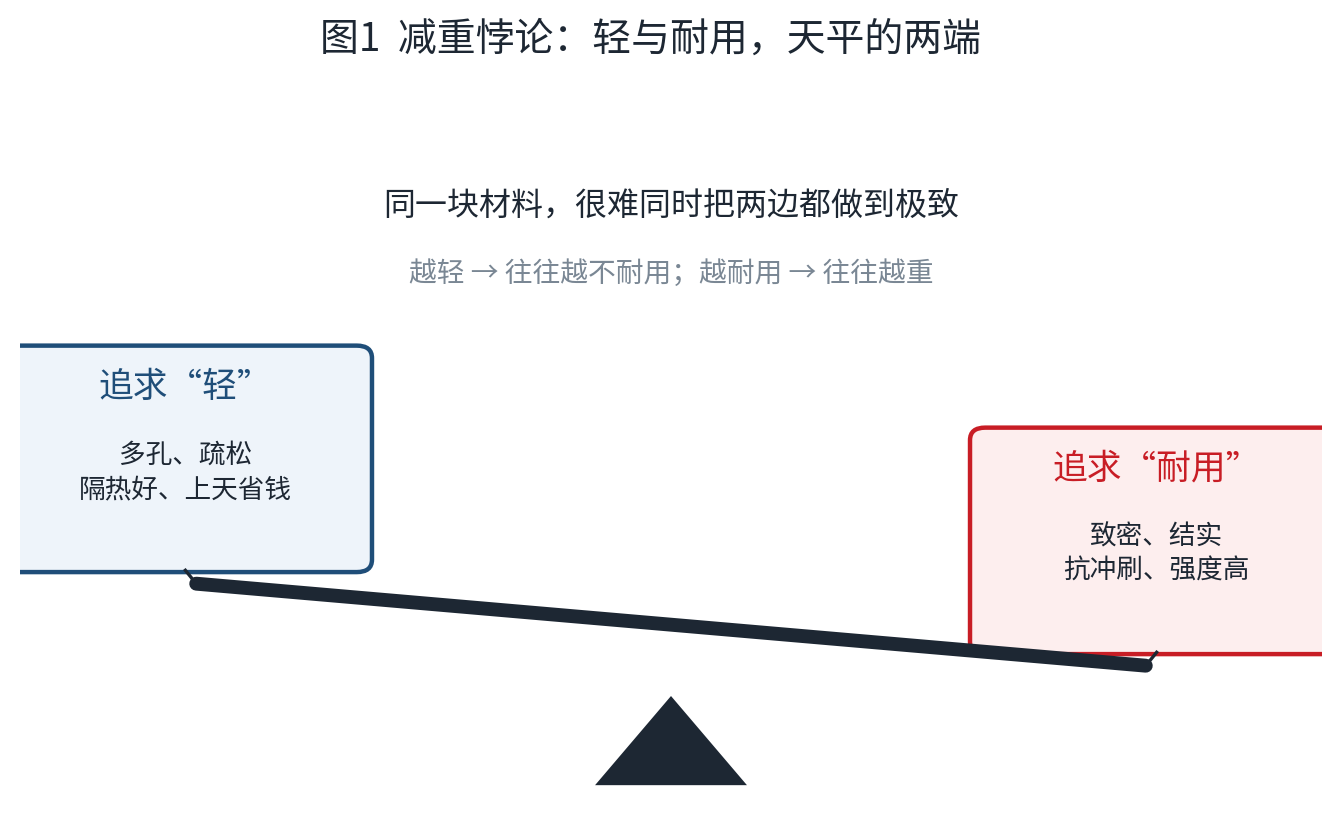
图 1 减重悖论:轻与耐用,天平的两端
甜点区:不是最轻,也不是最安全
In engineering practice, the optimal solution is neither "as light as possible" nor "as safe as possible," but rather finding a balance.甜点区(Sweet Spot)——在满足安全裕度的前提下,实现系统级重量最优。
Optimizing the sweet spot for reentry requires multidisciplinary collaboration: aerodynamic shape dictates the thermal environment, which determines material requirements; material selection influences vehicle mass; and mass in turn affects payload capacity and orbital design. This is a tightly coupled iterative process that cannot be solved by any single discipline alone.
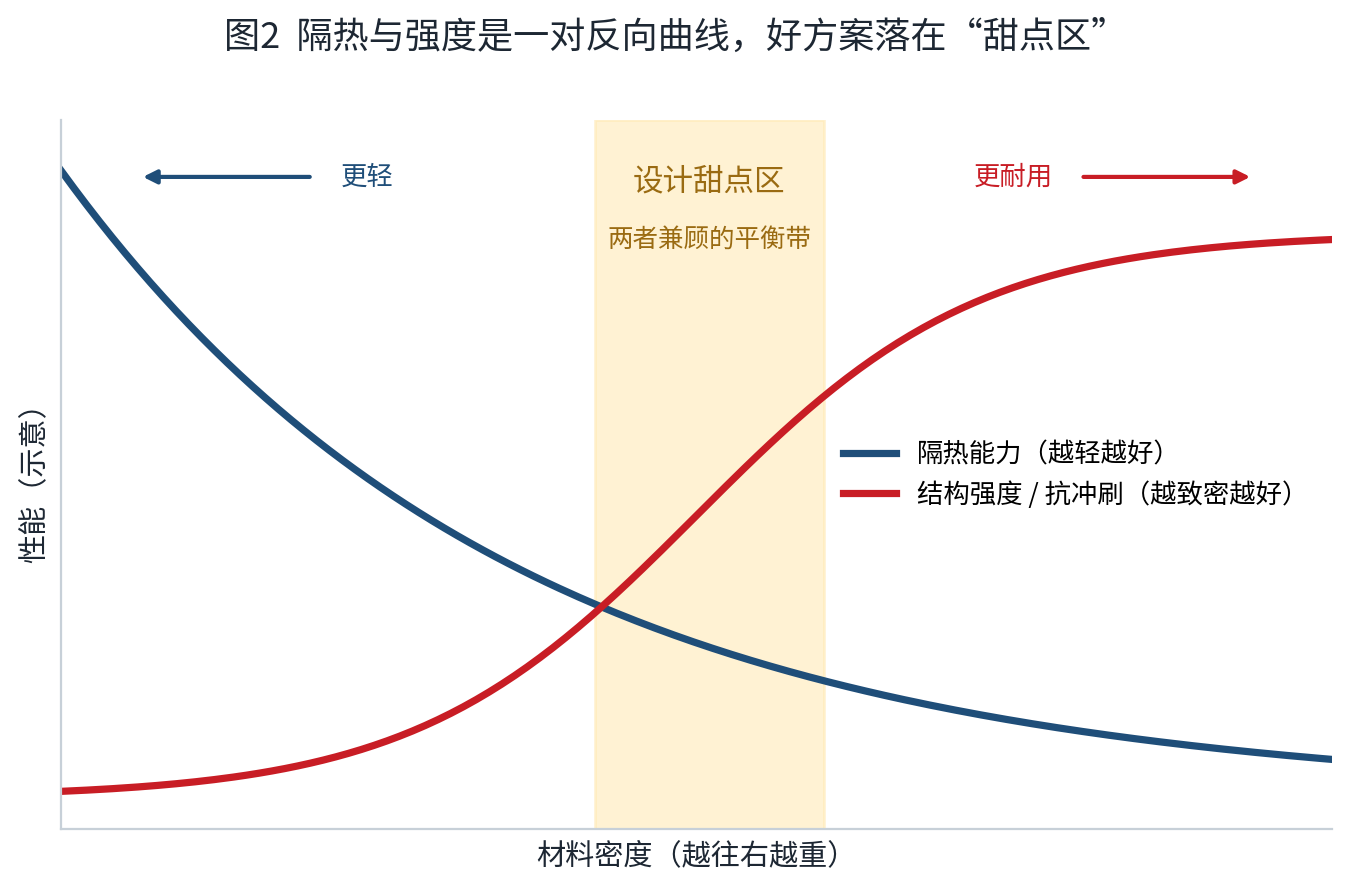
图 2 隔热与强度是一对反向曲线,好方案落在"甜点区"
Realistic Paths to Weight Loss
- gradient materials:外层耐高温、内层低导热,各司其职,避免"一种材料扛所有"
- 主动冷却Use minimal coolant to dissipate large amounts of heat, allowing for a thinner passive thermal protection layer.
- 结构-功能一体化:让承力结构同时具备隔热功能,消除冗余层次
- Precise Prediction: Improve thermal environment prediction accuracy to reduce weight waste from excessive safety margins.
减重没有银弹,只有在多重约束之间反复权衡后的工程妥协。