
Industrial Furnaces, Nuclear Power, Firefighting: The Second Front for Heat-Resistant Materials

Industrial furnaces, nuclear power safety, fire-resistant construction, and metallurgical/chemical processing—these less "glamorous" scenarios represent the true, vast second battlefield for refractory materials.
1. Introduction: More Than Just Rockets and Spaceships
Refractory materials power more than just rockets and spacecraft. From the furnaces burning day and night in industrial kilns to the safety barriers in nuclear plants, fire partitions in buildings, and high-temperature production lines in metallurgy and chemical industries—these less "glamorous" applications represent refractories' vast second battlefield.
2. Common sense: The floor also requires heat-resistant materials.
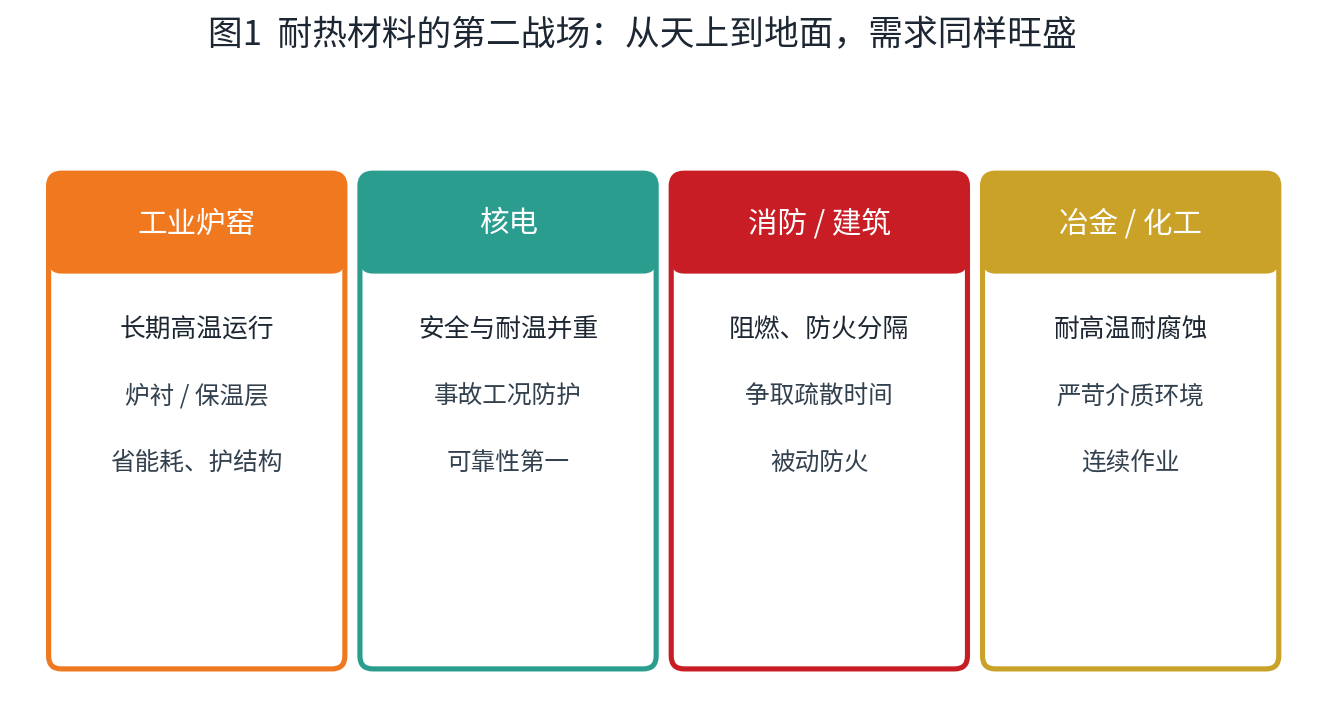
Figure 1: The second battlefield for heat-resistant materials: from sky to ground, demand remains equally strong.
Industrial furnaces rely on refractory linings and insulation layers for long-term high-temperature operation and energy efficiency. Nuclear power demands extreme temperature resistance, safety, and reliability from materials. Fire-retardant and fire-separation materials in firefighting and construction buy critical time for evacuation. Metallurgy and chemical industries operate continuously in harsh environments characterized by high heat and corrosion. Refractory materials serve as the silent foundation of these industries.
3. Shared Technology: Aerospace Precision vs. Civilian Durability and Cost-Efficiency
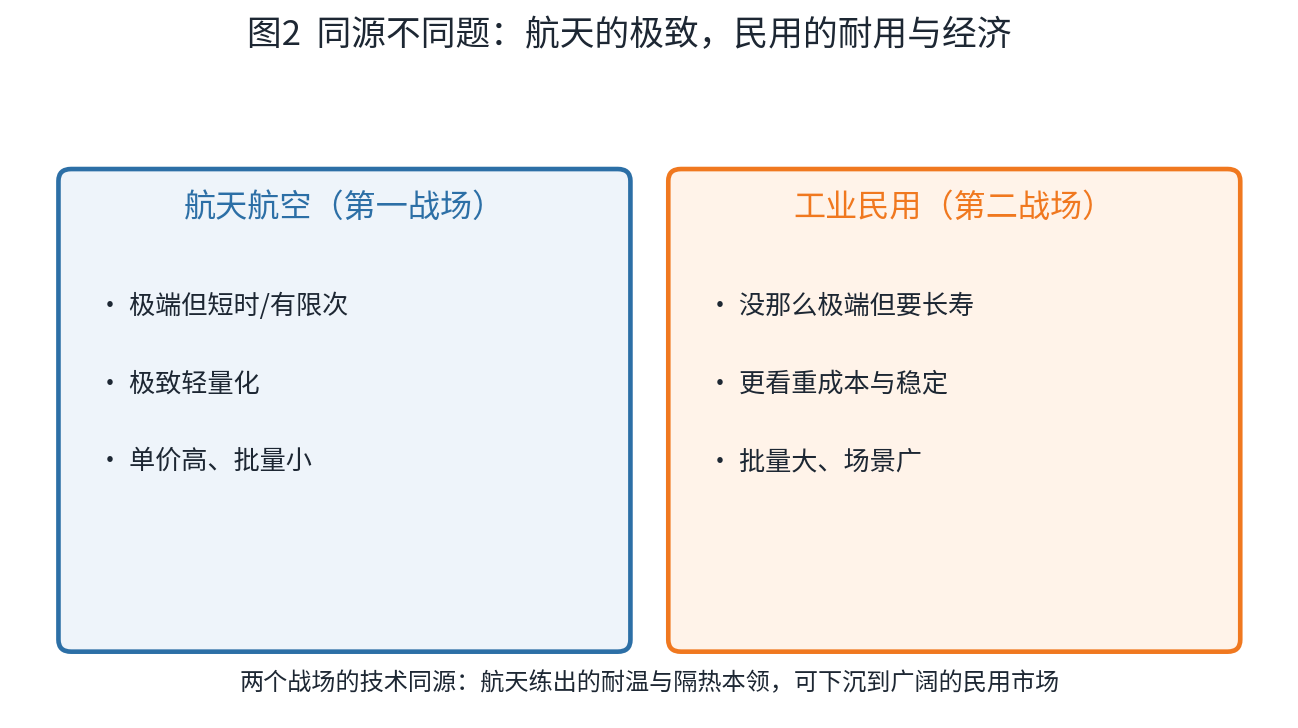
Figure 2: Same origin, different applications: Aerospace's peak performance vs. Civilian durability and cost-efficiency
Both fields share the same technology: heat resistance and insulation skills developed for aerospace can be adapted for the broad civilian market.
The First Front (Aerospace) demands peak performance under extreme conditions—short-duration, limited-use cycles, and high unit costs. The Second Front (Industrial & Civilian) operates in less extreme environments but prioritizes longevity, reliability, cost-efficiency, and mass production. Both share the same technology base: heat resistance and insulation mastered for space applications can be adapted to the vast civilian market, shifting the focus from "extreme performance" to "durable and affordable."
Challenge: Achieving both high performance and cost-efficiency.
The challenge in commercial applications often lies not in hitting peak performance metrics, but in achieving long-term stability, scalable manufacturing, and cost control. Delivering a material that meets temperature requirements while remaining affordable, reliable, and available for mass production tests engineering expertise and cost management capabilities.
5. Tianyi Perspective: Shared Technology, Dual Value Realization
Tianyi Quan'an treats aerospace and civil applications as two fronts of the same origin. For industrial and civil markets, we emphasize balancing performance, cost, and stability, using ground testing to validate material performance under real-world conditions over time. Our heat-resistant and thermal-insulation technologies, derived from aerospace, maintain their position in high-end segments while also delivering value across a broader range of applications.
⑥ Further Reading · Test Consultation
In-site Extensions:
Thermal Protection Materials: Understand All Four Strategies at a Glance
Ceramizable MaterialsLiquid at room temperature, armor when exposed to fire.
3-minute Energy Storage Cabinet: The Material Logic Behind GB 38031-2025
Consultation Test
Need heat-resistant or thermal insulation solutions for industrial or commercial applications? Contact Tianyi Extreme Environment Laboratory to discuss.