
From Space to Consumer Electronics: Why Thermal Runaway in Power Batteries Also Needs Thermal Protection

Thermal protection sounds like an aerospace specialty, but it's already quietly integrated into your daily life—such as in the power batteries of electric vehicles and energy storage stations. When a single cell goes into thermal runaway and catches fire, what stops it from igniting neighboring cells is a thermal management approach rooted in the same principles used in aerospace.
When you hear "thermal protection," you might picture the blazing heat shield on a spacecraft reentering Earth's atmosphere. But did you know this same technology is safeguarding your daily commute in an electric vehicle, the energy storage station near your neighborhood, and even the smartphone in your pocket?
1. Basics: What is the "Thermal Runaway Chain" in Power Batteries?
A battery pack consists of hundreds or thousands of cells tightly packed together. If one cell experiences thermal runaway due to an internal short circuit, overcharging, or mechanical damage, its temperature can spike above 800°C within seconds, releasing large amounts of flammable gas. Without effective heat isolation, adjacent cells can ignite in a chain reaction—a phenomenon known as "thermal runaway propagation."
The core objective of thermal protection is one:Locks heat in place during a single cell thermal runaway to prevent it from spreading across the entire battery pack.This follows the same logic as a spacecraft heat shield, which keeps external heat out—except in reverse: aerospace prevents external heat from entering, while batteries prevent internal heat from spreading.
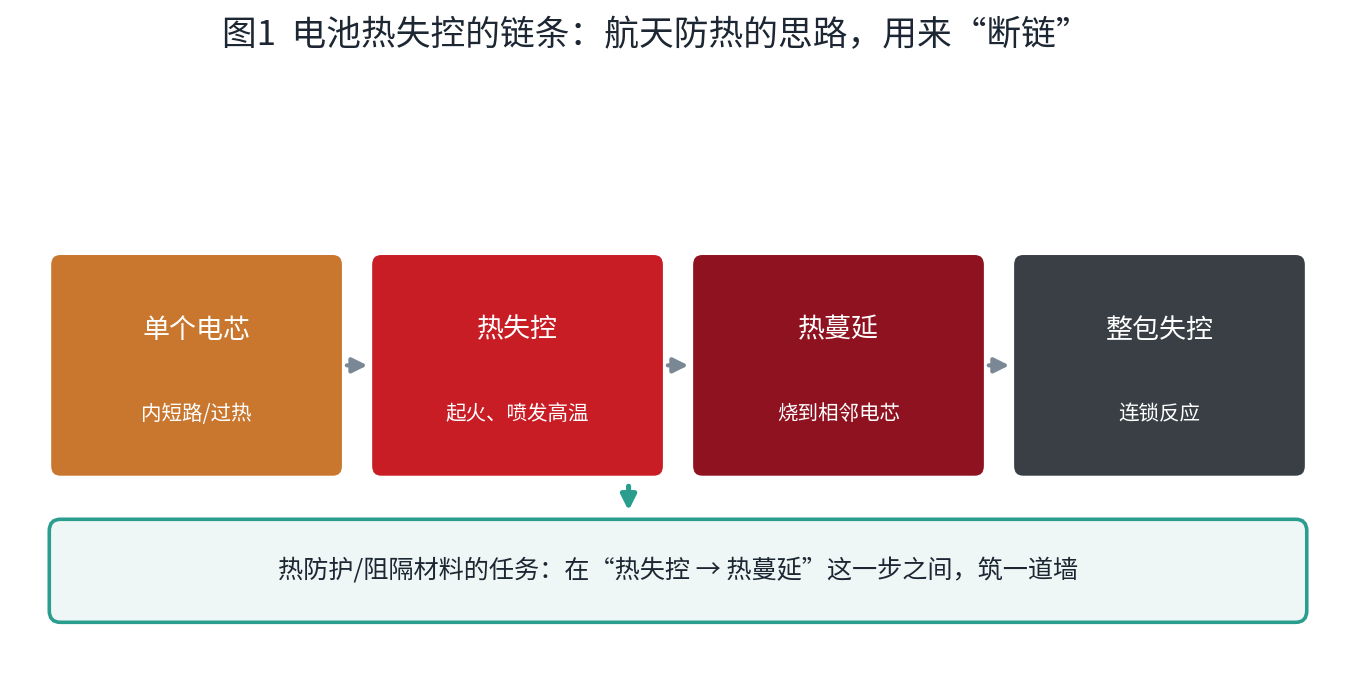
Figure 1: Schematic of thermal runaway chain reaction in power battery packs—heat propagation from a single cell to adjacent cells after failure
II. Reality: Two Fronts, One Core Challenge
In the aerospace sector, thermal protection materials must maintain structural integrity and insulation performance under extreme temperature variations ranging from -170°C to +1650°C. In the power battery sector, materials must withstand instantaneous high-temperature shocks within limited space while ensuring lightweight design and long-term reliability.
A common challenge for both is:
Higher maximum operating temperature: must withstand instantaneous temperatures far exceeding those of conventional materials
Low thermal conductivity required: Effectively blocks heat transfer paths
Limited volume and weight: Safety should not come at the expense of energy density or payload.
High environmental adaptability: Must withstand long-term conditions such as vibration, humidity, and aging.
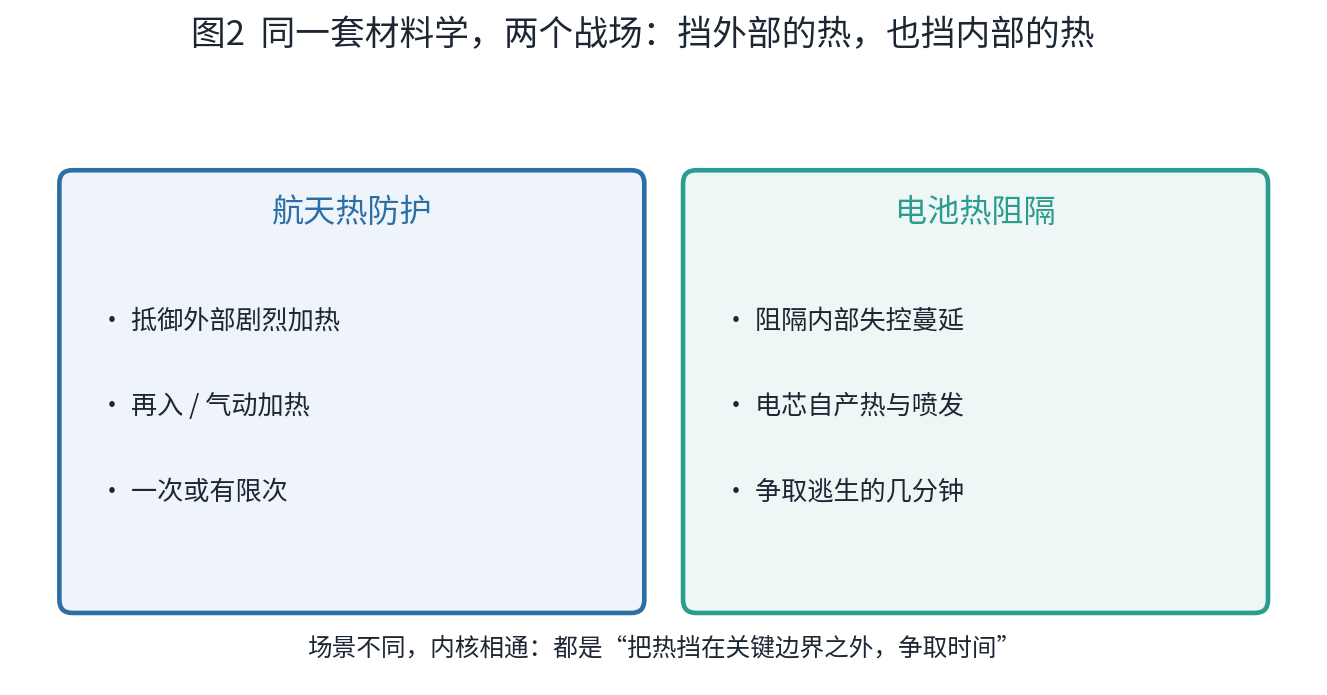
Figure 2: Comparative Analysis of Thermal Protection in Aerospace and Power Battery Systems: Bridging Extreme Environments with Everyday Safety
III. Challenge: Ultra-thin, ultra-light, yet built to last
The internal space of a battery pack is at a premium. The thermal protection layer is often only a few millimeters thick, yet it must withstand temperature shocks of hundreds of degrees the moment a cell goes into thermal runaway. This imposes nearly contradictory requirements on the material:
Thin: Must not encroach on cell space, or it will reduce the overall energy density of the battery pack.
Light: Every additional 1 grams of weight reduces range.
StrongResists crumbling, shrinking, and cracking under high-temperature shock
StableNo performance degradation over the full lifecycle (8-15 years)
Traditional asbestos-based materials offer high heat resistance but pose carcinogenic risks and have high density; conventional aerogels provide excellent insulation but lack strength and tend to dust. The industry urgently needs a new thermal protection material that combines ultra-low thermal conductivity, high strength, and environmental safety.
IV. Tianyi Perspective: From Aerospace Heritage to Civilian Application
Tianyi New Materials' thermal protection technology is rooted in our extensive R&D of aerospace-grade insulation. We have adapted core technologies proven in the aerospace sector—ultra-lightweight and ultra-low thermal conductivity—to meet the specific operating conditions of power batteries:
Material System Innovation: Based on a proprietary inorganic fiber-reinforced composite system, achieves thermal conductivity as low as 0.03 W/(m·K) while meeting battery pack assembly requirements for compressive strength.
Precise process control: Through a unique molding process, material thickness is precisely controlled within the 1-5mm range, ensuring reliable thermal insulation even at ultra-thin profiles.
Full-scenario validationThe product has passed the thermal runaway test specified in GB 38031-2020 "Safety Requirements for Power Batteries of Electric Vehicles" and multiple aerospace-grade environmental simulation tests.
From sky to ground, applications evolve; our mastery of thermal control remains unwavering.
V. Further Reading
If you're interested in thermal protection technology, we recommend exploring the following topics:
Aerogel Insulation Material Selection Guide: From Principles to Engineering Practice
2024 EV Battery Safety Standards Explained: New Thermal Runaway Test Requirements
From Aerospace to Everyday Life: Cutting-Edge Technologies That Changed the Way We Live
Need a professional thermal protection solution?
Contact Tianyi New Materials' technical team to get a customized thermal protection solution for your application.