
Satellite Thermal Control: The hardest part in space isn't heat—it's the extreme thermal cycling.
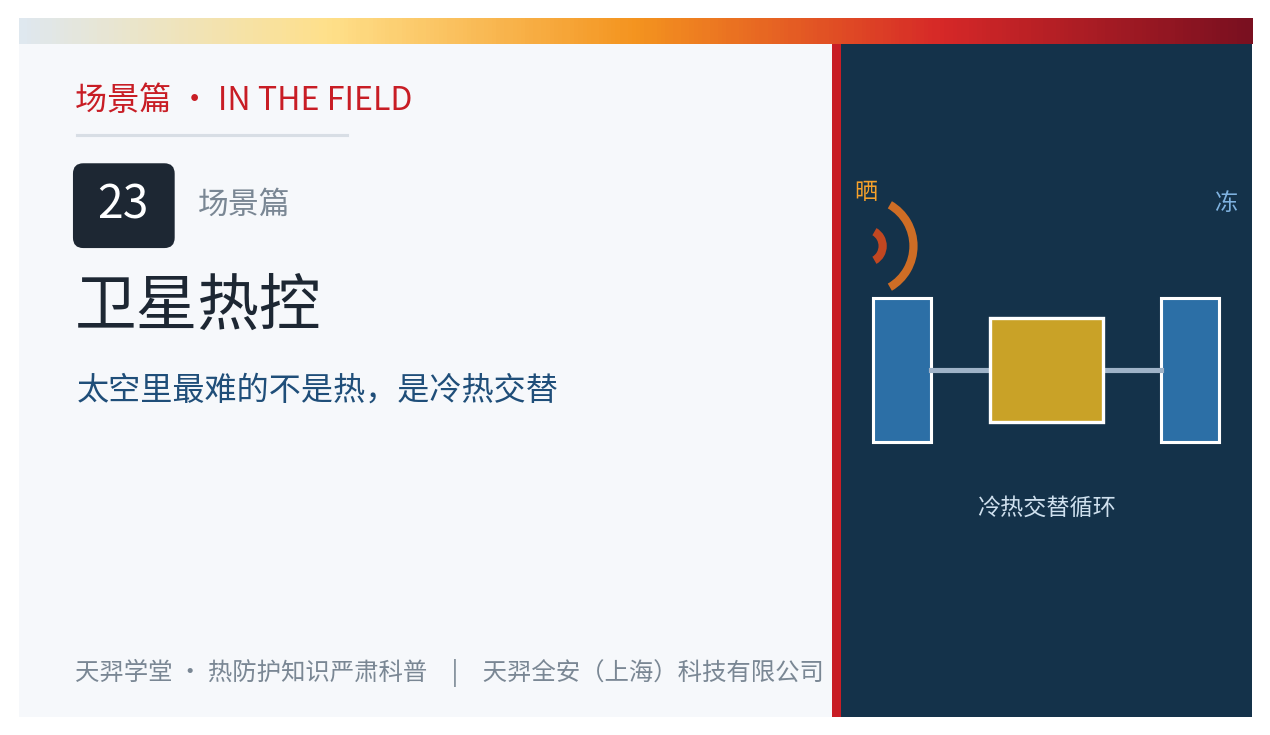
Space is both cold and hot. On the same satellite, the sunlit side can reach over 100°C, while the shaded side drops below -100°C. As it orbits Earth, these extremes switch every few dozen minutes. The toughest challenge in space isn't just heat—it's this relentless cycle of extreme temperature swings.
Common sense: The real challenge is "extreme temperature swings."
Space is both cold and hot. On the same satellite, the sunlit side can reach over 100°C, while the shaded side drops below -100°C. As it orbits Earth, these extremes switch every few dozen minutes. The toughest challenge in space isn't just heat—it's this relentless cycle of extreme temperature swings.
Figure 1: Space isn't just hot; it's a brutal cycle of scorching heat and extreme cold with every orbit.
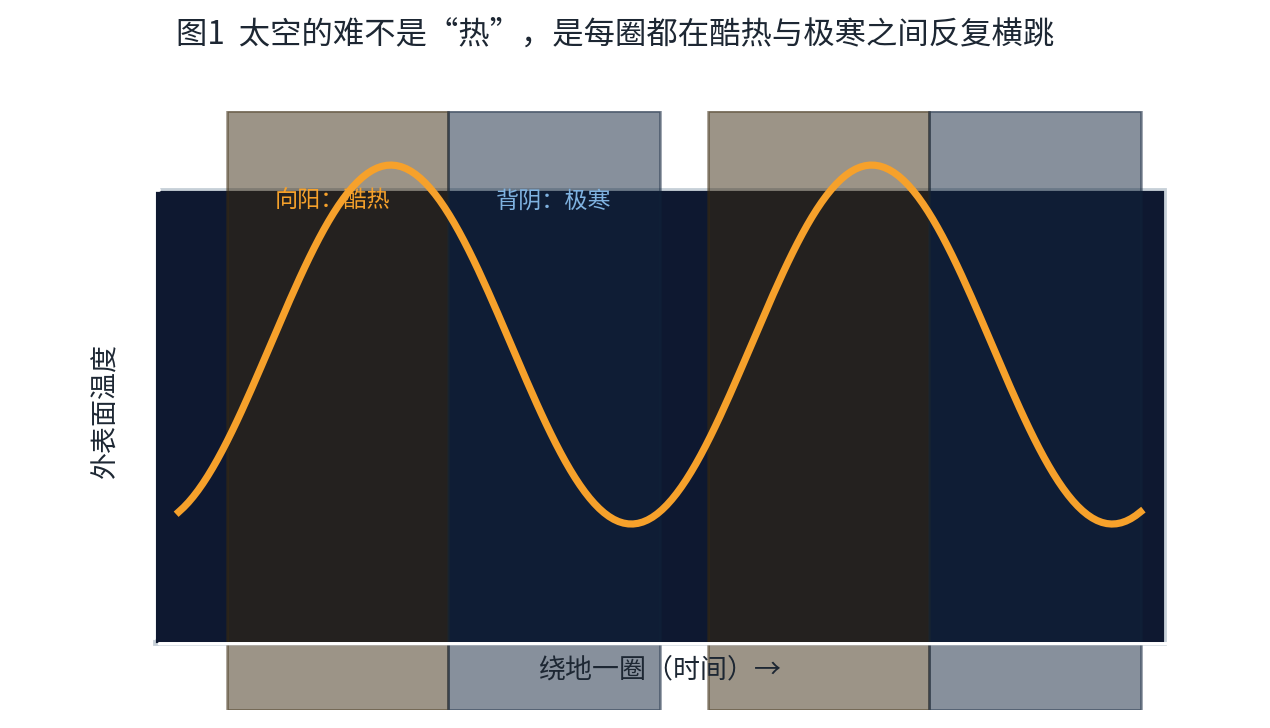
Image 1 completes one orbit around Earth, with its exterior alternating between extreme heat and freezing cold.
Without atmospheric regulation, satellite surfaces scorch under direct sunlight and rapidly freeze when entering Earth's shadow. Each orbit subjects them to extreme thermal cycling. For internal electronics, batteries, and optical components, this repeated thermal shock is far more challenging than exposure to high or low temperatures alone.
Reality: The goal is "stability," not fragmentation or preservation.
Figure 2: Satellite Thermal Control Trio – Keeps temperature in the "just right" window
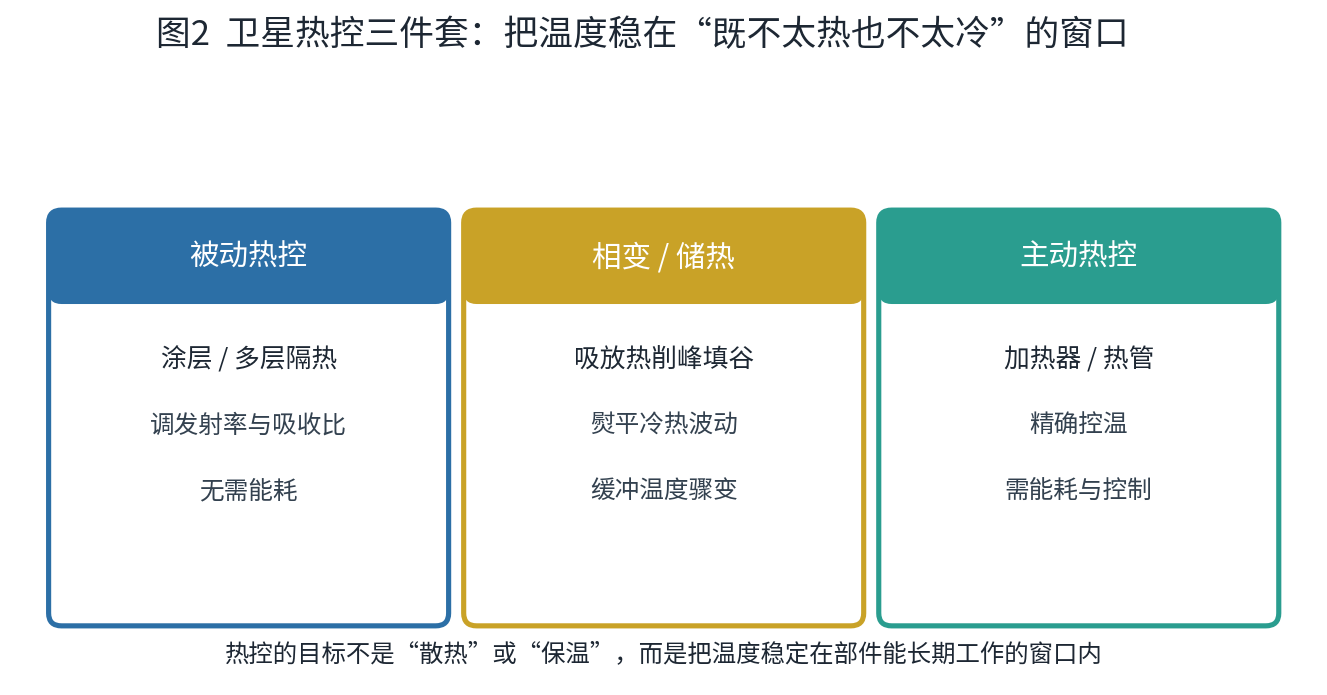
Figure 2: Satellite thermal control trio — passive, phase-change/thermal storage, and active.
Satellite thermal control isn't about just cooling or heating; it's about keeping temperatures within the operating window for long-term component reliability. Methods fall into three categories: passive (coatings, multilayer insulation to manage absorption and emission), phase-change or thermal storage (smoothing peaks and valleys), and active (heaters, heat pipes for precise control). Most satellites use a combination of all three.
Challenge: Ensuring stability and reliability over a long lifespan
Satellites often operate for years, enduring tens of thousands of thermal cycles. Thermal control coatings degrade in optical performance over time and due to the space environment, while active components cannot afford sudden failures. Maintaining stable temperature throughout a satellite's long, unrepairable lifespan is the core challenge of thermal control.
Tianyi Perspective: Thermal Management Is a Systemic Challenge
Satellite thermal control reminds us: thermal protection isn't just about withstanding high temperatures—it's about precise temperature management. Tianyi Quan'an focuses on the stability of thermal control coatings and insulating profiles under alternating hot and cold conditions, incorporating key metrics such as emissivity and cycle durability into our evaluations. We advocate validating long-term performance through ground-based cycling tests—true temperature control must withstand repeated testing.
Read More · Test Consultation
In-site Extensions:
- → Three paths of heat: conduction, convection, and radiation—the three locks against heat
- → Thermal Shock and Thermal Match: Materials fail not from burning, but from being torn apart.
- → Ceramizable material: Coating at room temperature, armor when exposed to fire
Consultation TestConcerned about coating stability under thermal cycling? Contact Tianyi Extreme Environment Lab for cycle testing.