
Arc Jet Facility: Simulating Atmospheric Re-entry on Earth

To verify if a material can withstand atmospheric reentry, the ideal approach is to launch it into space—but that's prohibitively expensive, slow, and infrequent. Engineers solved this with "ground-based reentry": arc jet wind tunnels use electric arcs to heat gas to extreme temperatures, then blast it at materials, replicating the harsh conditions of space right in the lab.
① Introduction: Ground-based Reentry Heat Flux
To verify if a material can withstand atmospheric reentry, the ideal approach is to launch it into space—but that's prohibitively expensive, slow, and infrequent. Engineers solved this with "ground-based reentry": arc jet wind tunnels use electric arcs to heat gas to extreme temperatures, then blast it at materials, replicating the harsh conditions of space right in the lab.
2. General Knowledge: How does an arc jet wind tunnel work?
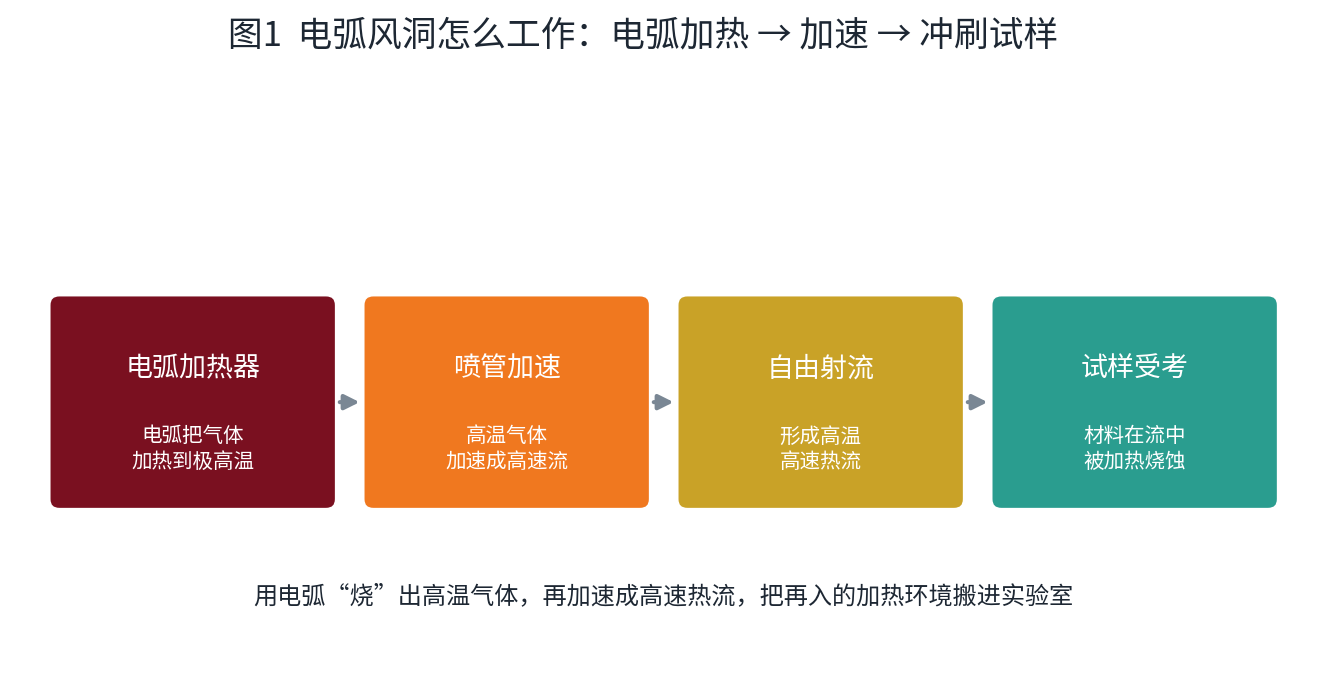
Figure 1 How an Arc-Jet Wind Tunnel Works: Arc Heating → Acceleration → Impingement on Sample
The principle involves four steps: first, a powerful electric arc heats the gas to extremely high temperatures; next, a nozzle accelerates this hot gas into a high-speed jet, creating a free jet that is both hot and fast; finally, the material sample is exposed to this jet, undergoing continuous heating, ablation, and erosion. This effectively recreates the heating environment of atmospheric re-entry on the ground.
3. Value and Limits of Arc-Jet Facilities: Similar, but Not Equivalent to Real Flight
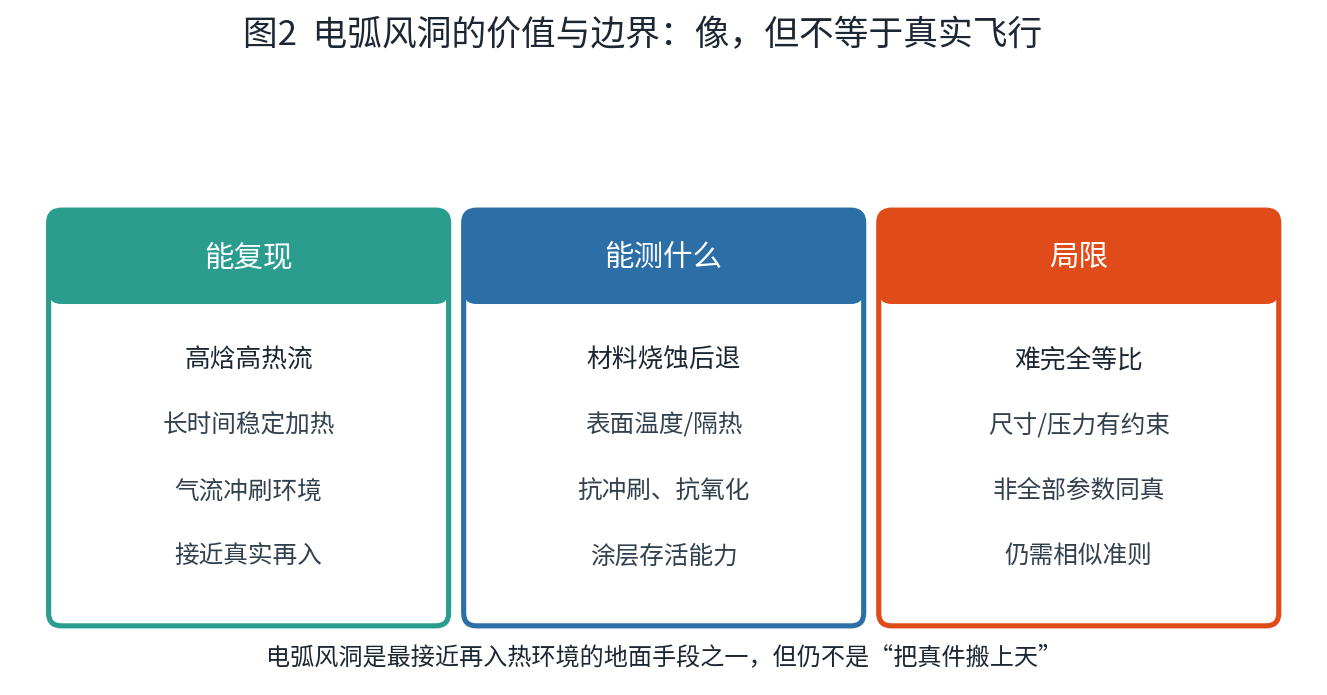
Figure 2: The Value and Limits of Arc-Jet Wind Tunnels: Similar, but Not Equivalent to Real Flight
Arc-jet wind tunnels deliver high-enthalpy, high heat flux, and sustained heating with stable gas flow, closely replicating real re-entry conditions. They evaluate material ablation, surface temperature, thermal insulation, erosion resistance, and oxidation performance. However, they have limitations: size and pressure constraints mean not all parameters match actual flight. Results must be extrapolated using similarity criteria. While highly representative, arc-jets are not a substitute for full-scale flight testing.
4. Challenge: The more realistic, the more expensive and harder to run.
Arc wind tunnels are large, complex, and energy-intensive facilities with high operating costs. Precise control is required for heat flux calibration, system stabilization, and sample mounting. Ensuring stable, repeatable reproduction of target conditions and accurate data acquisition is the core challenge for such facilities.
5. Tianyi's Perspective: Bringing Re-entry Testing to Wuxi Laboratories
Tianyi Extreme Environment Laboratory is building ground-based extreme environment testing capabilities, including arc jet wind tunnels. Our goal is to faithfully recreate harsh conditions like re-entry and aerodynamic heating within the lab. We emphasize evaluating materials using calibratable, reproducible heat flux–time profiles rather than simply reporting a static temperature rating. The ability to accurately simulate "space challenges" on the ground is itself a rare capability.
⑥ Further Reading · Test Consultation
In-site Extensions:
The Reentry Blackout: Temperature, Time, and the Distance to Humans
How to Calibrate Heat Flux Density: The Root of All Controversies
Full Map of Ground Test System: How Materials Are "Tested"
Consultation Test
Need to evaluate your material under arc wind tunnel conditions? Contact Tianyi Extreme Environment Laboratory for a tailored solution.